
- Home
- Products
- Consumable
- Capabilities
- Service
- Videos & News
- About
- Contact Us
Views: 0 Author: Site Editor Publish Time: 2026-04-05 Origin: Site


Medical devices are getting smaller, but manufacturing demands are getting harder. As specialized catheters grow more complex, catheter assembly automation helps improve precision, consistency, and output. In this article, you will learn where custom automation adds value, which processes matter most, and what to evaluate before choosing a custom catheter assembly machine or integrated line.
Specialized catheter manufacturing is difficult to scale because the products themselves are difficult to stabilize. Many designs combine multi-layer tubing, miniature components, soft polymers, thin-wall structures, and highly sensitive joining zones in a single assembly flow. In advanced applications such as neurovascular, cardiovascular, and electrophysiology devices, production may also require micron-level tolerances and full-process verification, which sharply raises the difficulty of manual handling and inspection.
Manual assembly can still support low-volume development work, but it becomes a weak point when manufacturers need consistent output across multiple catheter models. Operators must control alignment, heat input, bonding pressure, and part placement with very little margin for variation. That challenge grows in high-mix environments, where frequent product changes increase the risk of setup drift, inconsistent quality, and longer training cycles. A production line may not fail because a process is impossible, but because it is too variable to repeat reliably shift after shift.
Off-the-shelf automation can solve standardized handling tasks, but specialized catheter programs rarely stay within standard boundaries. The difficulty is not only part size; it is the combination of unusual geometries, proprietary joining or forming steps, limited floor space, and strict validation expectations. Many manufacturing challenges do not have a catalog solution because the part, process, or footprint is too application-specific for standard equipment to handle efficiently.
A generic platform may automate one motion well while leaving the surrounding process unstable. For catheter manufacturing, that is a serious limitation because assembly steps are tightly connected: handling affects alignment, alignment affects bonding quality, and bonding quality affects downstream inspection and yield. Standard machines are also less effective when production needs recipe-based changeovers, traceability, or coordinated integration with validation protocols and cleanroom-ready workflows. This is why manufacturers often move from adapted equipment to purpose-built systems once process complexity becomes a measurable production risk.
Production reality | Why standard automation struggles | Why custom automation fits better |
Tight tolerances and delicate parts | Fixed tooling may lack enough control or compliance | Tooling, motion, and force profiles are designed around the exact catheter build |
Multiple catheter variants | Changeovers can be slow or inconsistent | Recipes, modular fixtures, and variant-specific logic improve flexibility |
Proprietary multi-step processes | Catalog systems usually address isolated tasks | Integrated stations can coordinate joining, handling, inspection, and data capture |
Validation and traceability demands | Basic platforms may not support full documentation flow | Custom systems can be designed with verification and data logging from the start |
Custom catheter assembly automation reduces risk before full production ramp-up because it turns process knowledge into controlled machine behavior. A tailored system improves repeatability, reduces operator dependence, and supports stronger process control through integrated tooling, motion coordination, and inspection logic. These platforms can improve first-pass yield, reduce manual labor, log production data, and support stable scale-up in specialized catheter production lines. In one catheter sub-assembly example, a custom multi-station machine improved first-pass yield from 94% to 99.7% while replacing a manual four-person operation.
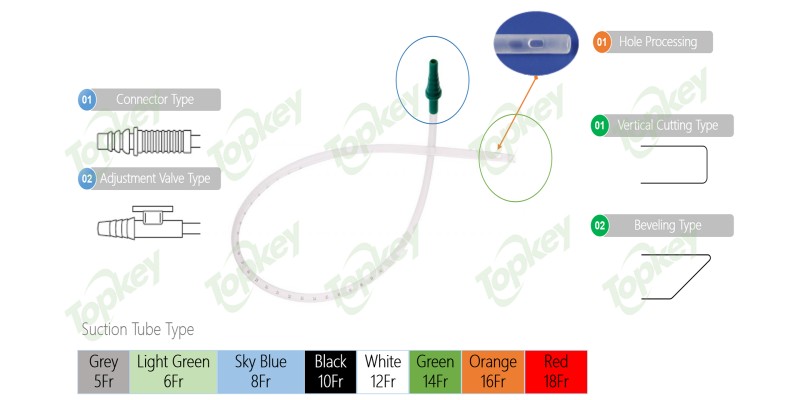
Joining quality is one of the most critical control points in catheter manufacturing because weak or inconsistent bonds can directly affect leak resistance, structural integrity, and downstream device performance. In specialized assemblies, manufacturers may rely on thermal bonding, UV bonding, or ultrasonic welding depending on the materials, geometry, and functional requirement of the connection. What makes automation essential is not just speed, but the ability to apply force, position, and energy in a repeatable way across high volumes of delicate parts. Programmable motion and force control are especially valuable in catheter tube welding and assembly tasks where small deviations can damage parts or create hidden defects.
A controlled joining process should also generate verifiable data rather than simply complete a motion. In practice, that means the system can confirm whether the bond was made under the correct conditions instead of assuming a good result from machine cycling alone. This matters in regulated production where process consistency has to be demonstrated, not guessed.
Catheter automation must also manage a group of shaping and handling tasks that are easy to underestimate but difficult to stabilize. Shaft and tip processing often includes tipping, flaring, necking, and hole-forming operations, each of which demands close control of heat, timing, alignment, and material response. These are not generic pick-and-place motions. A small variation in temperature exposure or part positioning can change the final geometry of the catheter tip, which then affects insertion performance, mating accuracy, or later assembly steps.
Handling is equally important because many catheter components are too soft, too small, or too thin-walled for conventional gripping methods. Precision vacuum grippers, servo motion, and real-time force feedback provide practical ways to move miniature parts without deforming them. For specialized devices, automation has to treat forming and handling as one connected discipline: the system must place the part accurately, shape it consistently, and transfer it without introducing variation before the next station.
Process area | What the automation system must control |
Bonding and welding | Force, position, energy input, and confirmation of process completion |
Tipping and forming | Heat exposure, dwell time, alignment, and final geometry consistency |
Part handling | Gentle gripping, transfer precision, and damage prevention for fragile components |
Inspection and testing | Dimensional verification, visual defect detection, and functional checks |
Workflow integration | Station-to-station synchronization, part tracking, and traceable data capture |
Inspection is most effective when it is built into the process rather than isolated at the end of the line. Specialized catheter systems increasingly use inline dimensional checks, machine vision, leak testing, pull testing, and AI-guided visual inspection so that defects can be detected at the station where they originate. This shortens feedback loops and prevents defective parts from accumulating value through later processing. Automated 100% leak testing, camera-based inspection, and structural verification are increasingly treated as core processes rather than optional add-ons.
The practical advantage is that verification becomes part of process control. A machine can flag alignment drift, reject a failed bond immediately, or log measurements to a traceability database before the part moves forward. In one catheter sub-assembly example, vision inspection was built into multiple stations and every measurement was recorded, supporting both yield improvement and traceability.
The strongest systems do not automate isolated tasks; they connect assembly, coating or curing, inspection, and transfer into a coordinated sequence similar to an integrated catheter production line. This approach improves throughput because each station is designed around the timing and quality needs of the next one, reducing manual handoffs and minimizing variation caused by reloading, repositioning, or inconsistent queueing between processes. Cohesive lines can combine shaft preparation, joining, component assembly, finishing, curing, and testing within one automation architecture.
Integration also improves traceability. When part movement, process parameters, and inspection results are managed within one system, manufacturers can associate each device with a clearer production history. That matters not only for quality analysis, but also for validation, troubleshooting, and scale-up planning when catheter programs move from development volumes to stable commercial output.
Custom catheter automation starts with architecture selection, because the wrong platform can limit throughput, waste floor space, or make future product changes unnecessarily expensive. Three common approaches are rotary indexing systems, robotic workcells, and linear transfer platforms, each suited to a different balance of output, flexibility, and process complexity. Rotary indexing tables are typically favored when manufacturers need compact, multi-station assembly with high repeatability and short transfer distances. Robotic cells are better suited to applications that require flexible handling, variable part presentation, or more open-ended sequencing. Linear or carousel systems fit longer process chains where stations must be arranged in sequence across a broader footprint.
Architecture | Best fit | Main trade-off |
Rotary indexing system | High-output, space-constrained multi-station assembly | Less flexible than a robotic cell once the sequence is fixed |
Robotic workcell | Variable handling, frequent product changes, complex part presentation | Lower throughput than a dedicated rotary system in many repetitive tasks |
Linear platform | Longer sequential processes with multiple specialized stations | Larger footprint and more transfer distance between operations |
The design decision is rarely based on speed alone. Engineering teams typically compare architecture options against cycle time, floor space, cost range, and risk, which is especially important in specialized catheter production where precision requirements can make a theoretically flexible system less practical in daily operation.
Once the architecture is chosen, performance depends on how precisely the system interacts with fragile catheter components. Specialized assemblies often require custom tooling, vacuum handling, servo-driven positioning, and force-managed contact rather than standard grippers or simple pneumatic motion. Precision linear motion, coordinated multi-axis servo control, and actuator-based force feedback are especially important for tasks where excessive pressure, backlash, or unstable motion could deform parts or compromise joining quality.
This is why tooling and motion design are inseparable. A fixture must hold the part securely without distorting it, while the actuator must land, press, weld, or align with enough control to maintain repeatability across thousands of cycles. Real-time feedback adds another layer of protection by allowing the machine to verify position, velocity, and force as the process runs, which is particularly valuable when 100% verification is expected in catheter manufacturing.
Custom automation is also designed for change. In catheter manufacturing, a system that only handles one part revision can become a bottleneck as soon as the product mix expands. Custom machines are often built to support multiple variants through quick-change tooling, servo-driven adjustments, and recipe-based changeover, with some systems targeting changeovers under five minutes.
That flexibility matters for both current production and future scaling. Modular stations, adaptable fixtures, and control logic tied to stored product recipes allow manufacturers to introduce new catheter models or process adjustments without rebuilding the full line. In practice, this makes custom automation more durable as a manufacturing asset: the machine is engineered not only for today’s process window, but also for future volume growth, validation updates, and evolving specialized device requirements.
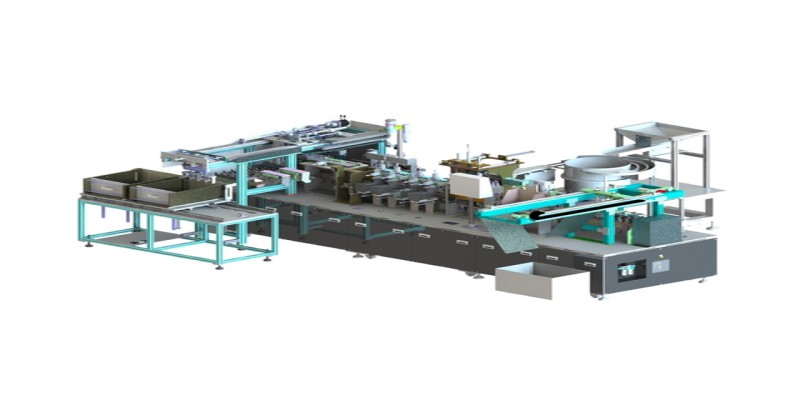
For medical manufacturers, automation should be evaluated as a validated production system, not just as a faster machine. That means documentation support, acceptance planning, and environmental compatibility must be defined at the beginning of the project rather than added after the equipment is built. Catheter automation systems are commonly designed for ISO Class 7 or 8 cleanroom use and are expected to support validation packages such as IQ, OQ, and PQ to align with FDA 21 CFR Part 820 requirements. A disciplined development path may also include formal design reviews, factory acceptance testing, site acceptance testing, and full documentation covering drawings, controls, maintenance, and procedures. These elements matter because they reduce the risk of a machine that runs in a demo but cannot be qualified or sustained in actual production.
Buyers should also pay attention to how the supplier verifies performance before shipment. FAT should involve actual or validated parts, simulated failure modes, and statistical cycle-time validation, followed by SAT in the production environment. That sequence is especially relevant for catheter applications, where a machine may need to prove not only speed, but also dimensional consistency, process repeatability, and stable operation in cleanroom conditions.
A modern catheter assembly platform should not only assemble parts, but also generate a reliable record of how each part was made. In practice, this means capturing process parameters, inspection outcomes, and pass/fail results at the station level, then making those records usable inside broader manufacturing or quality workflows. Platforms may support data connectivity through interfaces such as OPC-UA, MQTT, and REST API, along with MES and ERP integration, traceability databases, and real-time production monitoring. In one catheter sub-assembly example, every measurement was logged, creating a direct connection between inline inspection and device history.
When evaluating a system, buyers should check whether it can support:
● per-part data logging for critical dimensions and process parameters
● inspection record retention for audits and investigations
● recipe control for variant-specific settings
● connectivity to MES, ERP, or plant-level monitoring platforms
These capabilities are important because traceability is not only a compliance issue. It also improves root-cause analysis, supports process optimization, and shortens response time when defects appear in a complex catheter production flow.
Evaluation area | What buyers should confirm |
Validation package | IQ/OQ/PQ support, FAT/SAT protocols, documented acceptance criteria |
Cleanroom readiness | Suitability for ISO Class 7 or 8 environments, low-particle design where needed |
Data and traceability | Per-part logging, inspection records, traceability database capability |
System integration | MES/ERP connectivity, operator workflow fit, recipe and monitoring support |
Business performance | Yield impact, defect reduction, throughput stability, payback assumptions |
Labor savings matter, but they are only one part of the business case. In custom automation, ROI often comes from a wider mix of gains: improved first-pass yield, fewer defect escapes, lower scrap and rework, faster throughput, and more compact use of manufacturing space. One cited catheter example improved first-pass yield from 94% to 99.7% while replacing a four-person manual process, and broader ROI models commonly estimate payback periods of 12 to 24 months, with faster returns in higher-volume applications.
This broader view is useful when assessing solutions such as those developed by Topkey Medical Co., Ltd., because the strongest return usually comes from reduced production risk as much as from labor replacement. A system that produces more stable output, records every critical event, and supports faster troubleshooting can protect quality and capacity at the same time. For catheter manufacturers, that often makes ROI a question of operational resilience, not just headcount reduction.
Custom catheter assembly automation delivers the most value when it is built around real device needs, process demands, and compliance goals. The right system improves efficiency, quality, traceability, and long-term flexibility. As catheter designs become more advanced, Topkey Medical Co., Ltd. helps manufacturers scale with custom automation solutions that support reliable production and stronger product performance.
A: Catheter assembly automation uses controlled machines to join, form, inspect, and handle catheter components with repeatable precision.
A: Catheter assembly automation needs customization when products involve tight tolerances, delicate materials, multi-step joining, or frequent model changes.
A: In catheter assembly automation, buyers should assess validation support, traceability, cleanroom fit, and expected yield improvement before equipment selection.


