
- Home
- Products
- Consumable
- Capabilities
- Service
- Videos & News
- About
- Contact Us
Views: 0 Author: Site Editor Publish Time: 2026-03-29 Origin: Site


Medical care depends on products used once and trusted every time. That sounds simple, but medical consumables manufacturing demands strict control over quality, cleanliness, and consistency. In this article, you will learn what matters most in production and how to choose a reliable manufacturing partner for disposable and single-use products.
At first glance, disposable medical products seem easier to manufacture than durable devices. They are often smaller, lighter, and designed for one-time use. In practice, the opposite is true. A single-use item still enters a clinical environment where cleanliness, consistency, and functional performance are non-negotiable. The source material repeatedly emphasizes that these products are chosen because they help reduce contamination risk, support immediate use, and maintain safety in procedures where even a small defect can create outsized consequences. That is why manufacturers of disposable medical devices focus not only on output volume, but also on controlled production, quality assurance, and packaging discipline.
The reliability burden is high because “simple” does not mean forgiving. A connector, tubing component, suction part, or molded accessory may be low in unit cost, but it still has to fit correctly, remain clean, and perform the same way every time. If dimensions drift, surfaces are contaminated, or materials behave inconsistently, the product may fail long before anyone questions the design itself. In the uploaded reference, manufacturers highlight high-tolerance molding, cleanroom production, and medical-grade material selection precisely because disposable products must deliver dependable performance despite being produced in large numbers.
Why reliability expectations stay high for disposable products:
● They are used in contamination-sensitive medical settings.
● They are expected to work immediately without reprocessing.
● They are often produced in high volumes, which increases the impact of small defects.
● They must combine functional consistency with hygienic packaging and handling.
The hardest part of medical consumables manufacturing is not proving that one part can be made correctly. It is proving that thousands or millions of parts can be made with the same dimensions, material behavior, and cleanliness level over time. The source text repeatedly links mass production with “no deviation,” “uniformity,” “high tolerance,” and “high production capability,” which reveals the real challenge: scale magnifies every weakness in tooling, process control, and handling.
This is where disposable medical manufacturing differs from ordinary plastic mass production. General plastic parts can often tolerate wider variation if the end use is not safety-sensitive. Medical consumables cannot. Their production commonly relies on precise injection molding, controlled cleanroom conditions, secondary operations, and packaging workflows that protect the finished product before it reaches the user. The same source also notes the use of specialized molding methods, biocompatible materials, and ISO-oriented manufacturing conditions, showing that scale alone is not the selling point; stable, validated scale is.
Manufacturing pressure point | Why it becomes harder at scale |
Dimensional consistency | Small part-to-part variation can affect fit, sealing, or usability across large batches |
Clean production conditions | More volume means more opportunities for contamination during molding, handling, and packaging |
Material stability | Inconsistent material behavior can create variation in strength, tolerance, or appearance |
Process repeatability | Fast output only matters when every cycle produces the same acceptable result |
The fastest return on automation usually appears in high-volume production. When a factory runs large batches every day, even a small drop in labor cost, scrap, or downtime can create major savings over time. Automated grinding systems help in exactly these areas by reducing manual involvement, improving consistency, and keeping production moving at a steady pace. Because fixed costs are spread across more accepted parts, the cost per needle falls more quickly. In this kind of environment, ROI is often easier to measure because the same savings repeat across every shift and every batch.
Operation type | Why ROI is often strongest |
High-volume needle production | Labor and scrap savings scale across every batch |
Multi-specification production | Faster setup protects uptime between jobs |
Quality-driven medical manufacturing | Better repeatability lowers validation and inspection risk |
Integrated automated cells | Long-term cost per part improves beyond machine price alone |
Automation also delivers strong value in operations that handle many needle sizes, geometries, or customer-specific requirements. These factories often lose time during setup, adjustment, and changeover rather than during actual grinding. A system that supports quick fixture changes, standardized programs, and more controlled setup can reduce that lost time significantly. This makes scheduling easier and helps manufacturers respond faster to shifting order needs. In high-mix production, ROI depends less on maximum speed alone and more on how smoothly the equipment moves from one part type to another without creating delays or extra engineering work.
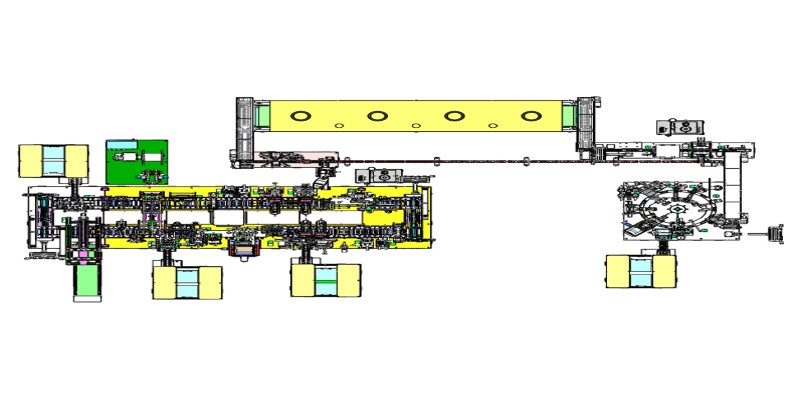
In regulated medical production, process stability has direct financial value. Manufacturers in this environment must maintain repeatable results, support traceability, and avoid unnecessary variation that could trigger additional inspection or process review. Automated grinding improves stability by controlling motion, angle, and force more consistently than manual methods. That reduces the chance of defects, lowers rework, and helps maintain predictable inspection outcomes. When quality standards are strict, the value of automation goes beyond labor savings because it also protects validated processes and reduces the hidden costs of inconsistency.
Before investing, manufacturers should compare systems based on long-term cost per part rather than purchase price alone. Important factors include automation level, repeatability, maintenance needs, changeover speed, and how easily the machine fits into upstream and downstream processes. Buyers should also consider tooling costs, consumables, installation time, operator training, and expected downtime over the life of the system. A practical evaluation includes these questions:
● How much manual intervention is still required after installation
● How quickly can the system switch between needle types
● Whether repeatability is sufficient for strict medical production standards
● How well the machine integrates with loading, gauging, and inspection
● What maintenance demands could affect uptime and operating cost
The most accurate ROI assessment comes from looking at the full operating life of the medical needle grinding machine, not just the initial equipment price.
When buyers compare suppliers for disposable and single-use products, production capacity is often the first point discussed. It matters, but it should not drive the decision on its own. In medical consumables manufacturing, the more important question is whether a supplier can maintain precision, cleanliness, and stable product quality over time. That is why buyers should pay closer attention to process control, cleanroom discipline, and tolerance consistency than to broad claims about output speed or factory size.
A reliable manufacturing partner should be able to show how consistency is built into daily production. This includes mold accuracy, controlled injection molding, cleanroom operations, careful material handling, and downstream steps such as assembly and packaging managed under the same quality system. Buyers should look for a supplier whose capabilities work together as one controlled process rather than as a list of disconnected services. In this respect, Topkey Medical Co., Ltd. should be evaluated on whether it can demonstrate stable execution across the full production chain, not simply on how many services it offers.
One practical way to assess a supplier is to ask how quality is protected during scale-up. A capable manufacturer should be able to explain how it controls variation across batches, how cleanroom standards are maintained in routine production, and how material choice supports both product function and process stability. A supplier that can clearly connect these points is usually more dependable than one that relies on general marketing language.
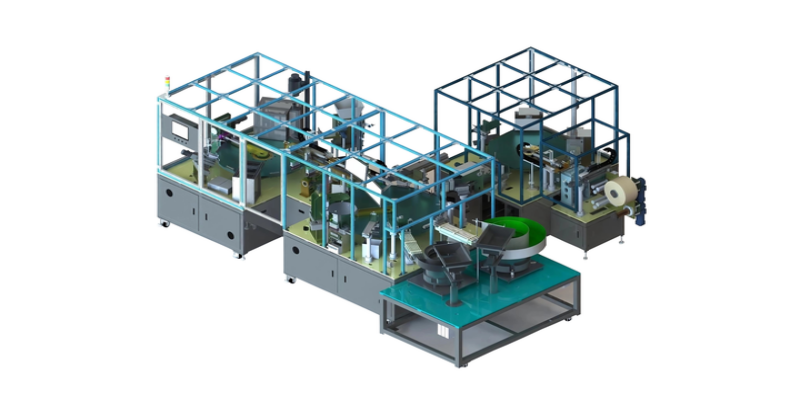
Questions buyers should ask during evaluation:
● Can the supplier explain how it controls variation across large production runs?
● Are cleanroom conditions part of routine production or only used for selected jobs?
● How are material choice, molding precision, and downstream operations connected in the workflow?
● Does the supplier support assembly and packaging, or only basic part production?
● Can the team demonstrate repeatable process control rather than general claims?
Compliance is another area where buyers need to look deeper. Certifications such as ISO 13485 are important, but they only have value when they reflect real process discipline. Buyers should look at whether documented standards are supported by daily production controls, traceable procedures, and a consistent quality culture. In medical consumables manufacturing, compliance should be visible in how the supplier works, not only in the certificates it presents.
The same logic applies to pricing. A lower quote may look attractive, especially for high-volume disposable products, but cost should always be considered together with manufacturing risk. If a lower-priced supplier has weaker contamination control, looser tolerances, or limited assembly and packaging capability, the actual cost may rise later through rejected parts, delivery problems, or corrective actions. For that reason, buyers reviewing Topkey Medical Co., Ltd. should consider not only price, but also how well its production system supports quality stability, clean manufacturing conditions, and dependable delivery.
Evaluation area | What buyers should look for |
Production consistency | Evidence of uniformity, high tolerance, and controlled large-scale output |
Compliance strength | A quality system supported by real process control and cleanroom discipline |
Process depth | Capability in molding, material selection, assembly, and packaging |
Cost assessment | Pricing considered together with defect risk, delivery stability, and operational support |
A stronger manufacturing partner is usually the one that reduces total project risk. For buyers, that means supplier evaluation should focus less on promises and more on whether Topkey Medical Co., Ltd. can repeatedly turn medical requirements into stable, large-scale production results.
Disposable and single-use medical products may look simple, but they require precise, clean, and consistent manufacturing. That is why strong medical consumables manufacturing depends on controlled production and reliable quality systems. Topkey Medical Co., Ltd. delivers value through precision molding, cleanroom production, and dependable support for high-volume medical consumables.
A: Medical consumables manufacturing is the controlled production of disposable medical products with consistent dimensions, clean processing, and validated materials.
A: Medical consumables manufacturing often uses cleanrooms to reduce contamination risk and support stable quality for single-use healthcare products.
A: In medical consumables manufacturing, buyers should assess process consistency, material control, cleanroom capability, and quality system discipline.


