
- Home
- Products
- Consumable
- Capabilities
- Service
- Videos & News
- About
- Contact Us
Views: 0 Author: Site Editor Publish Time: 2026-03-26 Origin: Site


Medical needle makers face rising costs from labor shortages, tighter quality standards, and growing output demands. Grinding is one of the most cost-sensitive steps because small errors can increase scrap and slow production. In this article, you will learn how an automated medical needle grinding machine can reduce labor costs, improve consistency, cut waste, and support stronger long-term profitability.
In medical needle manufacturing, grinding is not just a finishing step; it defines whether the tip meets the sharpness, geometry, and wall-thickness requirements needed for safe clinical use. Needle tips can be extremely delicate, and even slight contact or variation during processing can damage them beyond repair. In real production, manufacturers may handle wide size ranges and must still maintain exact form before final inspection, which is why this stage has an outsized effect on product acceptability and yield. A medical needle grinding machine matters here because precision at the tip influences how many parts move forward without rework, delay, or rejection.
Cost pressure at the grinding stage | Why it raises manufacturing cost |
Tight tip geometry tolerances | Small deviations can cause rejects or extra inspection |
Fragile needle ends | Minor handling damage can turn finished parts into scrap |
Match-ground part requirements | Incorrect pairing or inconsistency creates downstream losses |
High inspection sensitivity | More variation increases checking time and slows flow |
Manual and semi-automated grinding add cost because they depend heavily on operator technique, attention, and stamina. When an operator must rotate parts by hand, load and unload workpieces, or compensate for changing contact angle and pressure, consistency becomes harder to hold across long shifts. That variation can show up as unstable surface quality, uneven spray or finishing results, longer setup times, and more frequent interruptions. The source material also highlights a broader pattern: manufacturers adopting automation have reduced direct labor, improved throughput, and cut scrap, which implies the reverse is true for manual-heavy processes—higher labor intensity, slower output, and a rising cost per part. For cost-sensitive medical production, those losses accumulate quickly because every flawed needle consumes material, machine time, and inspection capacity before it is caught.
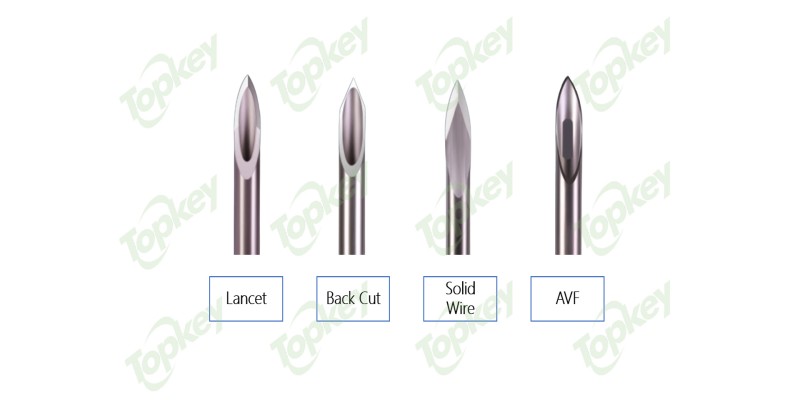
A medical needle grinding machine creates immediate savings when it takes over repetitive handling tasks that would otherwise tie up operators throughout the shift. In a manual setup, workers may need to load parts, rotate delicate cannulas during grinding, unload finished pieces, and check alignment before the next cycle begins. Automation compresses those touchpoints into one controlled sequence. In the source material, automated processes were described as requiring only one operator to load and unload product, while robots also replaced manual blowing, spraying, and tip-processing tasks around needle production. That shift matters because each removed manual step lowers the labor content built into every finished needle and reduces the staffing burden on each line.
Cost-saving function in an automated medical needle grinding machine | Operational effect |
Automated loading and unloading | Fewer repetitive operator tasks per cycle |
Controlled part positioning | Less handling-related variation and interruption |
Automatic setup support | Shorter setup time and reduced labor waste |
Continuous infeed or machine tending | More output with fewer line attendants |
Integrated gauging or repeatable motion | Less need for constant operator correction |
Automation also changes how labor is used. Instead of assigning one person to one grinding task, manufacturers can move toward a supervision model in which one operator monitors multiple machines. In practical terms, this means labor is no longer consumed by constant machine tending. It is redirected toward process oversight, quality response, and higher-value work that supports throughput without adding headcount.
Training costs fall when the process becomes standardized. Manual grinding often depends on feel, timing, and the operator’s ability to maintain steady pressure or contact angle across long runs. That makes results harder to reproduce across shifts, especially when experienced workers are difficult to replace. Automated systems reduce that dependency because machine-controlled motion repeats the same path, force, and cycle logic every time. The source text repeatedly connects automation with continuity, repeatable precision, and lower variation, which means manufacturers spend less time compensating for differences between individual operators and less money correcting avoidable process drift.
Operating cost does not depend only on wages; it also depends on how much productive time the machine actually delivers. Automated cycle control reduces idle time between parts, eliminates many of the pauses caused by manual handling, and supports smoother changeovers. One case in the source material reports that automated setup replaced a manual process that could take more than an hour, while another example highlights constant infeed as the key to continuous operation. The same material ties automation to higher uptime, better continuity, and productivity gains such as a 33 percent per-shift improvement in one study and tripled throughput in another medical-device environment. When a medical needle grinding machine spends more time grinding and less time waiting for people, setup, or correction, operating cost per part naturally moves down.
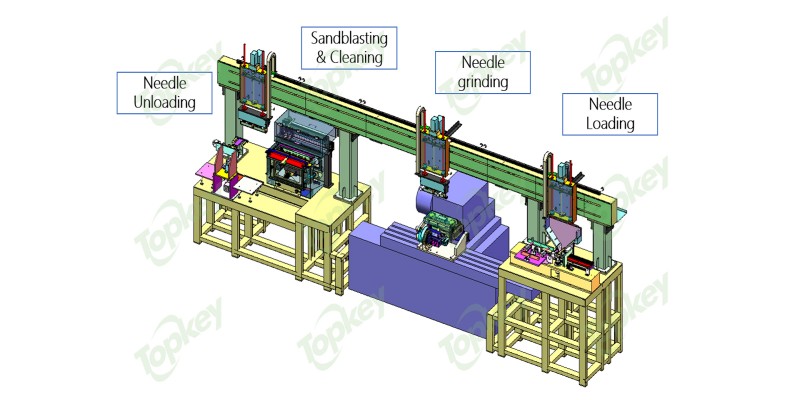
One of the biggest cost advantages of an automated medical needle grinding machine is repeatability. In needle production, small changes in pressure, angle, or part positioning can affect tip geometry, wall thickness, and overall dimensional accuracy. Manual grinding is especially vulnerable to this problem because results can shift with operator fatigue, handling differences, or inconsistent motion. By contrast, automated systems maintain controlled force, repeatable motion, and stable contact angle from part to part, helping manufacturers hold tighter tolerances across long runs. The source material also shows this in real production: one automated grinding application was able to hold a minimum wall thickness of 0.001 inch on a chamfer grind, while another system achieved positioning resolution down to 0.1 micron. That level of control directly reduces rejected parts and prevents raw material from being lost to variation that appears late in the process.
Automation effect | Cost impact on needle manufacturing |
Repeatable force and contact angle | Fewer geometry-related defects and rejects |
Stable dimensional control | Less raw material lost to scrap |
Consistent finish from first part to last | Reduced inspection burden and fewer borderline parts |
Automated gauging and feedback | Earlier correction before variation spreads across a batch |
Continuous infeed with controlled setup | Higher output without sacrificing part quality |
Scrap is only part of the savings story. Rework often consumes just as much time and money, especially in medical manufacturing where every correction step must still protect precision and cleanliness. When automated grinding produces a more stable finish, fewer parts need extra polishing, touch-up, or repeated inspection before they can move to assembly or packaging. The source text repeatedly links robotic grinding with less rework, fewer secondary operations, and reduced inspection time because the machine delivers the same finish throughout the cycle rather than drifting over the course of a shift. In one example from the file, automated silicone application eliminated scrap from poor spray coverage by following the same validated path every time; the same principle applies to needle grinding, where consistency at the grinding stage prevents defects from multiplying in later processes.
A useful way to think about this is as a chain reaction:
● Better grind consistency means fewer borderline parts entering inspection.
● Fewer borderline parts mean less sorting, touch-up, and retesting.
● Less rework shortens cycle time across the entire production flow.
● Shorter flow time reduces the hidden labor cost attached to each accepted needle.
This matters even more for match-ground or delicate needle components, where handling errors after grinding can turn a salvageable part into scrap. When the process is stable at the source, downstream teams spend less time compensating for variability and more time moving good product forward.
The fastest return on automation usually appears in high-volume production. When a factory runs large batches every day, even a small drop in labor cost, scrap, or downtime can create major savings over time. Automated grinding systems help in exactly these areas by reducing manual involvement, improving consistency, and keeping production moving at a steady pace. Because fixed costs are spread across more accepted parts, the cost per needle falls more quickly. In this kind of environment, ROI is often easier to measure because the same savings repeat across every shift and every batch.
Operation type | Why ROI is often strongest |
High-volume needle production | Labor and scrap savings scale across every batch |
Multi-specification production | Faster setup protects uptime between jobs |
Quality-driven medical manufacturing | Better repeatability lowers validation and inspection risk |
Integrated automated cells | Long-term cost per part improves beyond machine price alone |
Automation also delivers strong value in operations that handle many needle sizes, geometries, or customer-specific requirements. These factories often lose time during setup, adjustment, and changeover rather than during actual grinding. A system that supports quick fixture changes, standardized programs, and more controlled setup can reduce that lost time significantly. This makes scheduling easier and helps manufacturers respond faster to shifting order needs. In high-mix production, ROI depends less on maximum speed alone and more on how smoothly the equipment moves from one part type to another without creating delays or extra engineering work.
In regulated medical production, process stability has direct financial value. Manufacturers in this environment must maintain repeatable results, support traceability, and avoid unnecessary variation that could trigger additional inspection or process review. Automated grinding improves stability by controlling motion, angle, and force more consistently than manual methods. That reduces the chance of defects, lowers rework, and helps maintain predictable inspection outcomes. When quality standards are strict, the value of automation goes beyond labor savings because it also protects validated processes and reduces the hidden costs of inconsistency.
Before investing, manufacturers should compare systems based on long-term cost per part rather than purchase price alone. Important factors include automation level, repeatability, maintenance needs, changeover speed, and how easily the machine fits into upstream and downstream processes. Buyers should also consider tooling costs, consumables, installation time, operator training, and expected downtime over the life of the system. A practical evaluation includes these questions:
● How much manual intervention is still required after installation
● How quickly can the system switch between needle types
● Whether repeatability is sufficient for strict medical production standards
● How well the machine integrates with loading, gauging, and inspection
● What maintenance demands could affect uptime and operating cost
The most accurate ROI assessment comes from looking at the full operating life of the medical needle grinding machine, not just the initial equipment price.
Automated medical needle grinding machines lower costs by reducing labor, increasing throughput, cutting scrap, and improving quality consistency. The biggest gains come when automation improves the whole process, not just one machine. Topkey Medical Co., Ltd. delivers added value through precision-focused equipment, stable performance, and professional support that helps manufacturers solve real production problems and improve long-term ROI.
A: A medical needle grinding machine automates loading, positioning, and grinding, reducing manual handling and operator time.
A: Yes. A medical needle grinding machine improves tip consistency, which lowers rejects, rework, and material waste.
A: Automation pays off when a medical needle grinding machine improves throughput, changeovers, and cost per accepted part.


