
- Home
- Products
- Consumable
- Capabilities
- Service
- Videos & News
- About
- Contact Us
Views: 0 Author: Site Editor Publish Time: 2026-04-02 Origin: Site


Medical device makers face a tough balance: cut costs, keep quality high, and scale fast. That is why medical device automation matters more than ever. In this article, you will learn how automation reduces waste, improves throughput, and helps manufacturers make smarter investment decisions.
Medical device manufacturers are facing a difficult cost equation. Production is becoming more complex at the same time that labor shortages, higher wages, and demand volatility are making traditional manufacturing models harder to sustain. In this environment, companies are expected to scale output quickly, keep lead times under control, and still deliver the precision the industry requires. The pressure is not limited to payroll alone. It also comes from the need to manage unexpected spikes in demand, coordinate more sophisticated production steps, and maintain stable operations even when staffing or supply conditions shift. In other words, cost pressure today is structural, not temporary, which is why many manufacturers are rethinking manual workflows in favor of more scalable and consistent systems.
Cost pressure area | Why it hurts manufacturers |
Labor shortages and wage growth | Makes repetitive, manual production more expensive and harder to staff reliably |
Greater product complexity | Adds more opportunities for delays, variation, and process inefficiency |
Demand fluctuations | Forces teams to scale output quickly without disrupting quality |
Supply and workflow instability | Increases the cost of keeping production predictable and on schedule |
The biggest issue with manual production is that the true cost is rarely visible in one line item. A labor-heavy process often creates a chain of secondary losses: inconsistent handling, higher scrap rates, repeated adjustments, slower throughput, and more downtime when operators must stop to correct errors. In medical device production, those inefficiencies compound quickly because even minor deviations can affect downstream assembly, inspection, or packaging. Manual processes also make it harder to sustain repeatability across shifts, especially when tasks are physically taxing or depend heavily on operator technique. The result is a quieter but more damaging form of cost inflation built into daily operations.
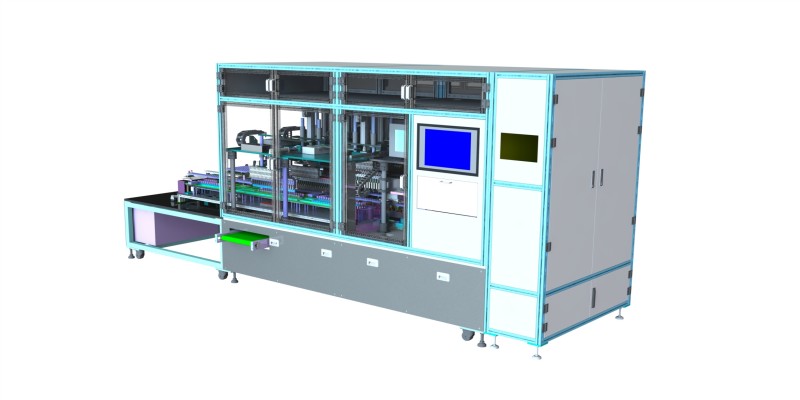
Manufacturers cannot reduce costs the way lower-risk industries sometimes do. In medical device production, quality, traceability, and compliance are inseparable from financial performance. Systems that improve documentation consistency, support traceability, and reduce variability help companies avoid much larger costs tied to recalls, non-compliance, or failed audits. The same operational discipline that protects patients also protects margins. That is why the most effective cost-reduction strategy is not simply to do things cheaper, but to do them more precisely and predictably.
Key requirements any cost-saving strategy must still support include:
● consistent product quality across runs and operators
● clear documentation and traceability
● reduced risk of defects and recalls
● alignment with FDA, ISO, and GMP expectations
One of the clearest ways medical device automation cuts costs is by reducing how much of the production floor depends on manual handling. In many plants, operators still spend significant time on repetitive steps such as loading components into fixtures, unloading sealed trays, moving parts between stations, or supporting packaging and pick-and-place tasks. Those activities are necessary, but they do not make the best use of skilled labor. Automation shifts these repetitive and physically taxing jobs to cobots, robotic handling systems, and integrated assembly equipment, allowing employees to focus on quality oversight, troubleshooting, and other tasks that require judgment rather than repetition. That shift does not simply lower payroll pressure. It also helps manufacturers operate more consistently when labor is difficult to recruit, train, or retain.
Automation also improves cost control by making production more repeatable. In medical device manufacturing, small deviations can create expensive downstream consequences, especially when components must meet tight tolerances or pass multiple inspection and packaging stages. Automated systems reduce operator-to-operator variability, keep critical movements precise, and support in-process adjustments when measurements begin to drift. That matters because scrap and rework are rarely isolated losses. A defective unit consumes material, machine time, labor, and often additional inspection effort before it is caught. By helping manufacturers produce parts correctly the first time, automation reduces waste while protecting throughput. Advanced inspection and measurement systems strengthen this effect by identifying dimensional or surface-level issues earlier, before defects multiply across a batch.
Cost driver on the production floor | How automation reduces it |
High manual labor input | Cobots and robotic handling take over repetitive loading, unloading, sealing, and pick-and-place tasks |
Scrap and rework | Repeatable motion, tighter process control, and automated inspection reduce variation and defects |
Slow cycle times | Integrated assembly systems shorten handoffs and keep lines moving more efficiently |
Unplanned downtime | AI-based monitoring helps predict failures before they stop production |
Rising per-unit cost at scale | 24/7-capable lines spread fixed operating costs across higher output volumes |
When lines move faster and more smoothly, the cost of each finished unit usually falls. Automated assembly systems help by connecting conveyors, calibration steps, robotic handling, sorting, and serialization into a more coordinated workflow. Instead of relying on repeated stops, handoffs, and manual adjustments, manufacturers can keep products moving through the line with fewer interruptions. Automation also supports higher output by enabling longer run times, including round-the-clock or “lights-out” production in suitable environments. This higher throughput improves equipment utilization and lets companies spread fixed costs across more finished devices. For manufacturers trying to meet demand without adding equivalent labor on every shift, that productivity gain becomes one of the strongest economic arguments for medical device automation.
Downtime is one of the most expensive problems on a production floor because its cost extends beyond the repair itself. When a critical machine fails, output stops, schedules slip, and labor and materials sit idle. Automation reduces that risk when connected sensors, AI-powered analytics, and monitoring systems are used to track equipment health in real time. These tools can flag abnormal patterns, support KPI review, and predict when a component is likely to fail, giving maintenance teams time to intervene before an unplanned stoppage occurs. Preventing one emergency repair can protect both production continuity and delivery performance, which is why predictive maintenance is increasingly treated as a cost-reduction tool rather than just a maintenance upgrade.
Assembly automation often produces one of the fastest and most visible returns because it affects multiple cost drivers at the same time. In medical device manufacturing, assembly is rarely a single action. It usually involves coordinated movement between conveyors, calibration points, robotic handling, sorting, and serialization. When these steps are linked through an automated system, manufacturers reduce manual touchpoints, shorten transfer time between stations, and limit the variability that slows production. That is especially valuable for high-volume or technically complex products, where even small interruptions can multiply across the line. A phased automation strategy can also improve speed to market while lowering operating costs, which is why assembly is often the first area where ROI becomes visible.
Automation area | Primary cost-saving impact |
Assembly automation | Cuts labor input, reduces line inefficiency, and speeds product movement across production stages |
In-line inspection and machine vision | Catches defects earlier to reduce rework, batch loss, and complaint-related costs |
Packaging automation | Lowers manual packaging labor while improving sealing, labeling, and compliance consistency |
Inspection is another major source of savings because it helps manufacturers catch problems before they become expensive downstream events. Automated vision systems, sensors, and in-line measurement tools can inspect parts in real time, detect tiny dimensional or surface deviations, and provide immediate feedback during production. That matters because the cost of a defect rises the later it is found. If an issue is only discovered after final assembly or packaging, the manufacturer may face rework, scrapped components, delayed shipments, and a greater risk of complaints or compliance issues. By moving quality checks closer to the point of manufacture, medical device automation improves repeatability while reducing the chance that defective units travel further through the process than they should. In highly regulated production environments, this earlier detection also supports more consistent documentation and better control over product quality.
A few of the highest-value inspection benefits include:
● faster identification of dimensional or surface-level defects
● less material and labor wasted on defective units
● lower risk of batch-wide quality failures
● stronger support for compliance-focused quality control workflows
Packaging automation delivers cost savings in a different but equally important way. Medical device packaging must do more than move products out the door quickly. It also has to preserve product integrity, support labeling accuracy, and align with packaging standards tied to unique device designs and instructions for use. Automated packaging systems help by replacing manual tasks and older mechanical processes with software-driven workflows that improve consistency across flow wrapping, end-load cartoning, and form-fill-seal pouching applications. This reduces the labor burden of repetitive packaging work while also lowering the likelihood of sealing mistakes, packaging variation, or labeling errors that can trigger waste and compliance risk. Because packaging is one of the final stages before distribution, improvements here protect both operational efficiency and downstream quality performance. Automated packaging also supports higher throughput, making it easier for manufacturers to increase output without adding equivalent pressure to labor-intensive end-of-line operations.
Before investing in automation, manufacturers should resist the urge to automate the entire operation at once. A stronger starting point is to identify where avoidable cost is already concentrated: bottlenecks that slow output, labor-heavy steps that absorb too much operator time, and defect-prone processes that generate scrap or rework. In many medical device environments, these high-impact areas include repetitive material handling, assembly handoffs, inspection stages with frequent variability, and packaging tasks that depend too heavily on manual execution. Focusing on those pressure points makes automation more strategic because the savings are easier to measure and the implementation risk is lower. A phased approach is often more practical than a full conversion, especially when companies need to protect commercial timelines while improving process understanding over time.
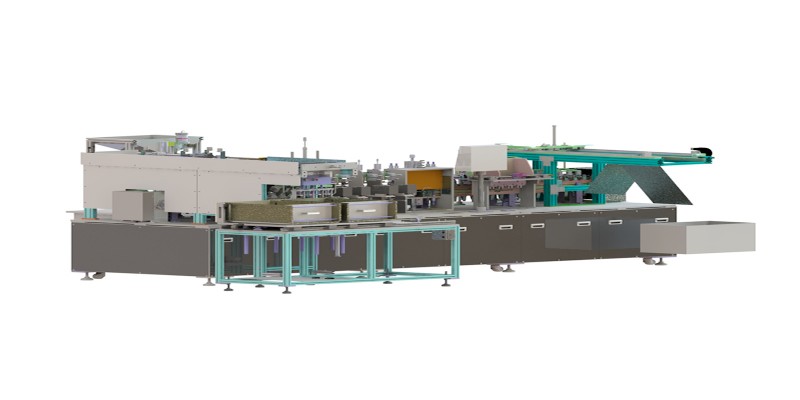
A narrow ROI model can underestimate the value of medical device automation. Labor reduction matters, but it should not be the only benchmark. A stronger business case also accounts for reduced scrap, fewer rework cycles, less unplanned downtime, higher throughput, and lower compliance-related risk. In regulated manufacturing, these indirect savings can be as important as direct payroll savings because they influence quality stability, time-to-market, and recall exposure. That is why decision-makers should evaluate total operational impact rather than one cost category in isolation.
Evaluation area | Why it matters before investment |
Bottlenecks and manual-heavy steps | Reveals where automation can remove the most avoidable cost first |
Scrap, rework, and downtime | Shows whether savings will come from stability as much as from labor reduction |
Throughput and time-to-market | Helps estimate how faster output will improve unit economics and commercial timing |
Compliance and traceability needs | Ensures the solution supports regulated production instead of creating new risk |
Scalability and integration | Determines whether the system will still fit future volumes, line changes, and process expansion |
Manufacturers should also evaluate how well an automation solution will fit future production needs. A system that solves today’s problem but cannot scale with demand, support line modifications, or integrate smoothly with other equipment may create new inefficiencies later. Flexible design matters because medical device production often evolves with product changes, regulatory updates, and shifting market demand. For that reason, scalability and integration should be treated as part of ROI, not as secondary features.
Medical device automation lowers costs through better labor efficiency, fewer defects, less waste, stronger uptime, and easier scaling. Manufacturers that invest strategically can improve both compliance and competitiveness. Topkey Medical Co., Ltd. delivers added value by supporting reliable, precision-focused automation solutions and services that help manufacturers build more efficient and cost-effective production lines.
A: Medical device automation lowers labor needs, reduces scrap, and improves throughput across regulated production lines.
A: No. Medical device automation can also improve consistency and ROI in complex, lower-volume manufacturing.
A: Manufacturers should assess bottlenecks, defect rates, uptime losses, and how medical device automation fits compliance requirements.


