
- Home
- Products
- Consumable
- Capabilities
- Service
- Videos & News
- About
- Contact Us
Views: 0 Author: Site Editor Publish Time: 2025-11-03 Origin: Site


You encounter several blood collection tubes in clinical practice, each with a distinct color designed for specific laboratory tests. Selecting the correct tube color matters because it can affect the accuracy of your blood sample results. For example, using the wrong additive or tube may alter the stability of certain analytes. Here’s a quick reference table to help you identify common tube colors and their primary uses:
| Tube Color | Common Use | Additive |
|---|---|---|
| Red | Chemistry, serology | None/Clot activator |
| Light Blue | Coagulation studies | Sodium citrate |
| Green | Plasma chemistry | Heparin |
| Lavender | Hematology | EDTA |
You can rely on Topkey’s Blood Collection Tube for safe and efficient blood collection that supports accurate diagnostics.
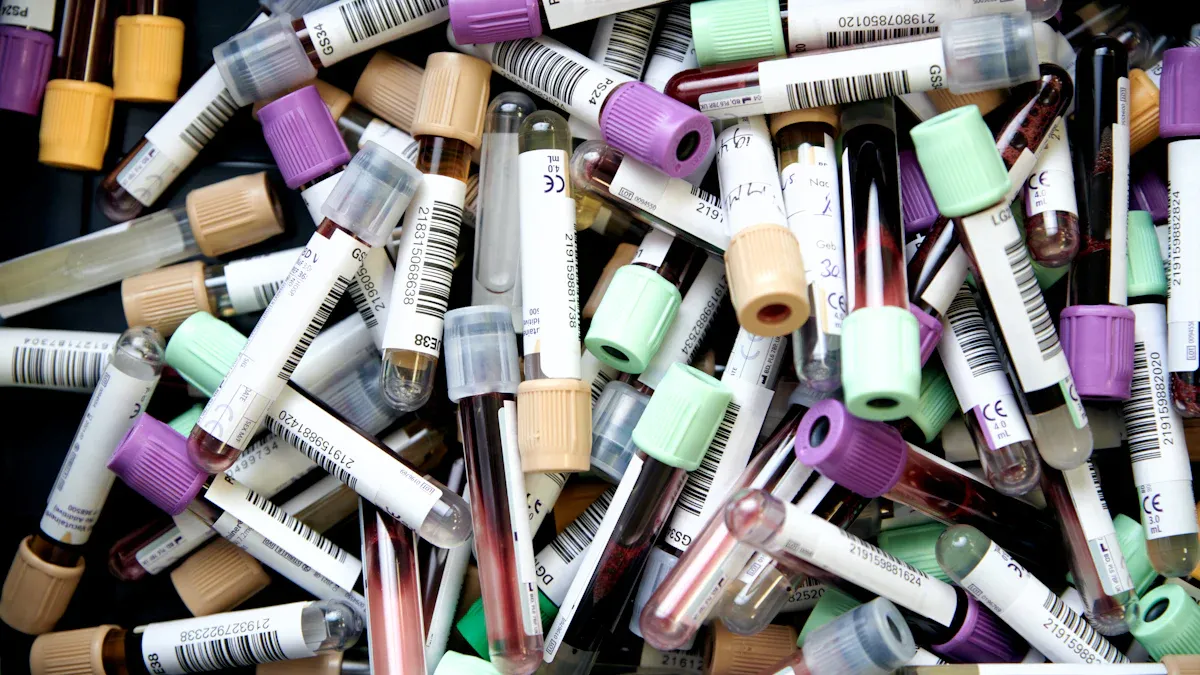
Blood collection tubes play a vital role in laboratory medicine. You see them every day in hospitals and clinics. Each tube has a specific color that tells you what kind of additive it contains and which tests it supports. The color coding system helps you quickly identify the right tube for the right test, reducing the risk of errors and ensuring accurate results for your patients.
You encounter several tube colors in clinical settings. The most frequently used ones include:
Red: Used for serum tests, such as blood chemistry panels and drug levels.
Light Blue: Contains sodium citrate, ideal for coagulation studies like PT and aPTT.
Green: Contains sodium or lithium heparin, suitable for plasma testing and electrolyte panels.
Lavender (or Purple): Contains EDTA, perfect for hematology tests like complete blood count and blood typing.
Gray: Contains potassium oxalate and sodium fluoride, used for glucose testing.
Yellow: Contains ACD or SPS, used for blood cultures and tissue typing.
Dark Blue (Royal Blue): Used for trace element testing, free of contamination.
Tip: Always check the tube color before collecting a blood sample. This simple step helps you avoid mix-ups and ensures the correct processing of each specimen.
Here is a summary table of common tube colors and the tests they are used for:
| Tube Color | Primary Use | Common Tests |
|---|---|---|
| Light Blue Top | Assessing coagulation and the clotting system | INR, APTT, PT, D-dimer, APTR |
| Red Top | Serological tests involving viruses, bacteria, or fungi | Specific immunoglobulins, cold agglutinins |
| Gold Top | A wide range of biochemistry tests | U&Es, LFTs, Bone profile, CRP, Amylase, Magnesium, Troponin, TFTs, Immunological tests |
| Green Top | Assessment of heparinised blood | Ammonia, TB quantiferon, homocysteine, routine biochemistry tests |
| Lavender Top | Haematological tests | Full blood count, HbA1c, G6PD, Malaria parasites |
| Pink Top | Blood group patients and crossmatch | Group and save, Crossmatch, Direct antiglobulin test |
| Royal Blue Top | Checking for trace elements | Copper, zinc, selenium, iodine, aluminum |
| Grey Top | Checking serum glucose levels | Serum glucose, serum lactate |
The color coding system for blood collection tubes follows international laboratory guidelines. You will notice some regional differences, but the core colors remain consistent worldwide. This system allows you to identify the type of additive in each tube at a glance, which is essential for selecting the correct tube for the tests they are used for.
In the United States, you find these common colour codes:
Red for blood banking and serology
Light blue for coagulation studies
Green for chemistry tests
Lavender for hematology tests
In the European Union, the colour codes are similar:
Red for biochemistry
Light blue for coagulation studies
Green for biochemistry
Purple for hematology
Global standards exist for blood collection tube colour codes, but minor regional differences may occur. Core colors such as lavender, light blue, green, and gray remain consistent across regions.
The history of tube colors dates back to the early 1900s. Dr. Joseph Kleiner invented the first vacuum-sealed collection tube in 1953. This innovation transformed blood collection practices. Over time, advancements in technology and medical research led to the development of color-coded tubes. Each color now represents a specific additive and purpose, making your job easier and reducing laboratory errors.
Note: The color coding system not only helps you identify the correct tube but also ensures the integrity of each blood sample. Using the right tube preserves the sample and supports accurate laboratory analysis.
You rely on these colour codes every day. They guide you in choosing the right tube for each patient and each test. This system supports safe, efficient, and reliable blood collection in every healthcare setting.
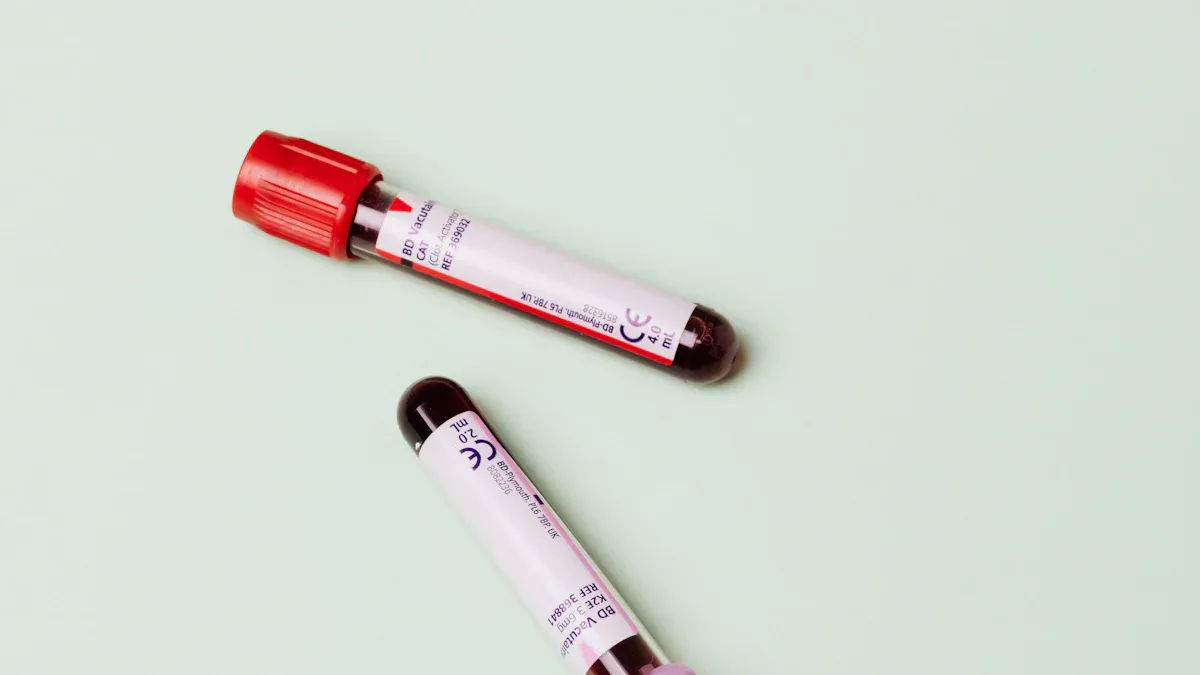
The red top tube stands out as one of the most familiar tools in clinical laboratories. You will often reach for this tube when you need to collect blood for a wide range of routine and specialized tests. Its design supports the separation of serum from blood cells, which is essential for many diagnostic procedures.
You use the red top tube for tests that require serum, not plasma. After you collect the blood, the sample sits for a short period to allow clotting. Then, you send it to the lab for centrifugation, which separates the serum from the clot. This process ensures that the serum remains free from additives that could interfere with test results.
Here are some of the main laboratory tests performed using the red top tube:
Basic metabolic panel (BMP)
Comprehensive metabolic panel (CMP)
Lipid panel
Liver function tests
Thyroid function tests
Hormone tests
Drug level monitoring
These tests help you evaluate organ function, monitor chronic conditions, and check for metabolic imbalances. You can also use the red top tube for serology and immunology studies, making it a versatile choice in many clinical scenarios.
Tip: Always allow the blood sample to clot completely before centrifugation. This step helps you obtain a clear serum sample for accurate analysis.
The red top tube contains minimal additives, which makes it unique among blood collection tubes. Most versions have no anticoagulant, but some include a clot activator to speed up the clotting process.
You will find the following features in the red top tube:
Clot Activator: This substance promotes the clotting of blood after collection. It helps you separate serum from blood cells efficiently during centrifugation.
Impact on Sample Integrity: The clot activator ensures that the clotting process happens quickly and completely. This step maintains the integrity of the blood sample, allowing for precise laboratory testing.
You should always check the label or packaging to confirm whether your red top tube contains a clot activator or is additive-free. Both types support high-quality serum collection, but the presence of a clot activator can reduce waiting time before processing.
Note: Using the correct tube and following proper procedures ensures that your blood samples yield reliable results. The red top tube remains a trusted option for many essential laboratory tests.
The light blue top tube plays a critical role in laboratory testing, especially when you need to evaluate how well a patient's blood clots. You will often reach for this tube when a physician orders coagulation studies. The color coding helps you quickly identify the correct tube, reducing the risk of errors and ensuring reliable results for your patients.
You use the light blue top tube for a specific group of tests that measure the clotting ability of blood. These tests help you diagnose bleeding disorders, monitor anticoagulant therapy, and assess the risk of excessive clotting. The most common coagulation tests performed with this tube include:
Prothrombin time (PT): Measures how long it takes for blood to clot. This test helps you evaluate the extrinsic pathway of the coagulation cascade.
Activated partial thromboplastin time (APTT or PTT): Assesses the intrinsic and common pathways of clotting. You use this test to monitor patients on heparin therapy.
Thrombin time (TT): Determines the time required for fibrin clot formation after adding thrombin to the sample.
Fibrinogen levels: Measures the amount of fibrinogen, a protein essential for clot formation.
Coagulation factor assays: Includes specific tests such as Factor VIII, which help you identify deficiencies or abnormalities in clotting factors.
Tip: Always fill the light blue top tube to the indicated line. Underfilling or overfilling can affect the accuracy of coagulation test results.
The light blue top tube contains sodium citrate as its additive. You will find that the standard concentration of sodium citrate in these tubes is 3.2%. This precise concentration is essential for accurate coagulation testing. Sodium citrate works by binding calcium in the blood, which temporarily prevents clotting. This action preserves the sample in a liquid state until the laboratory performs the required tests.
You must mix the tube gently after collection to ensure the sodium citrate distributes evenly throughout the blood sample. Proper mixing prevents clot formation and maintains the integrity of the specimen. If you do not follow this step, you may compromise the test results.
Note: The correct ratio of blood to sodium citrate is crucial. Too much or too little blood can lead to incorrect results, which may impact patient care decisions.
When you select the light blue top tube, you support accurate and timely diagnosis of clotting disorders. This tube remains a staple in every clinical laboratory, helping you deliver high-quality care to your patients.
The green top tube stands out as a reliable choice when you need to perform plasma-based chemistry tests. You often select this tube in clinical settings because it contains an additive that prevents clotting, allowing you to analyze the plasma component of blood. The color coding helps you quickly identify this tube among others, ensuring you collect the right sample for each test.
You use the green top tube for a wide range of chemistry tests that require plasma. This tube supports accurate and timely results, which are essential for patient care. Here are some common tests performed using this tube:
Chemistry panels: You analyze various chemical components in the blood, such as electrolytes, glucose, and kidney function markers.
Cardiac markers: You measure substances like Troponin and CK-MB to help diagnose heart disease or monitor cardiac events.
Therapeutic drug monitoring: You check medication levels to ensure they remain effective and safe for your patients.
Ammonia levels: You assess ammonia in the blood, which is important for evaluating liver function and detecting metabolic disorders.
Blood gas analysis: You evaluate acid-base balance and respiratory status, which is critical in emergency and intensive care situations.
Tip: Always mix the green top tube gently after collection. Proper mixing ensures the additive distributes evenly and preserves the integrity of your sample.
The green top tube contains heparin, a well-known member of the anticoagulants family. Heparin plays a crucial role in keeping blood from clotting during and after collection. When blood enters the tube, the heparin coating activates immediately. This action inhibits thrombin, a key enzyme in the clotting process, and ensures your sample remains liquid.
You will find that most green top tubes use lithium heparin as the primary additive. Here is how it works:
The tube contains lithium heparin, which acts as the main anticoagulant.
Lithium heparin inhibits thrombin activity, stopping the clotting cascade.
This process keeps the blood sample in a usable state for plasma-based testing.
Note: Using the correct tube and additive is vital for accurate laboratory results. The green top tube helps you avoid clotting issues and supports a wide range of diagnostic tests.
You rely on the green top tube for its efficiency and reliability in clinical chemistry. Its design and additive make it an essential tool for modern laboratory medicine.
The lavender top tube is a staple in clinical laboratories. You reach for this tube when you need to perform hematology tests that require whole blood analysis. The distinct purple color makes it easy to identify among other tubes, helping you avoid mistakes during sample collection.
You use the lavender top tube for a wide range of hematology tests. These tests help you evaluate the health and function of blood cells. Common procedures include:
Complete blood count (CBC): This test measures red cells, white cells, and platelets. It helps you detect anemia, infection, and other blood disorders.
Hemoglobin A1c: You use this test to monitor long-term glucose control in patients with diabetes.
Blood typing and crossmatching: These tests are essential before transfusions to ensure compatibility.
Reticulocyte count: This test assesses bone marrow activity and helps you diagnose certain types of anemia.
Malaria parasite detection: You use this test to identify malaria infection in patients with fever and travel history.
Tip: Always invert the lavender top tube gently after collection. Proper mixing ensures the additive works effectively and preserves the sample for accurate testing.
The lavender top tube contains EDTA, a powerful anticoagulant. You rely on EDTA to keep blood samples in the right condition for analysis. Here is how EDTA works in the tube:
EDTA binds to calcium ions, which are necessary for blood clotting. This action keeps the sample liquid and ready for testing.
It preserves the shape and structure of blood cells. This feature is crucial for accurate hematology results.
EDTA prevents platelets from clumping together. You get precise platelet counts, which are important for diagnosing bleeding disorders.
You benefit from the reliability of the lavender top tube in routine and specialized hematology tests. The EDTA additive ensures that blood samples remain stable and suitable for laboratory analysis. You can trust this tube to deliver consistent results, supporting high-quality patient care.
Note: Always check the expiration date and storage conditions of your tubes. Fresh tubes with intact additives help you maintain sample integrity and avoid errors in laboratory results.
You often use the yellow top tube when you need to collect blood for specialized tests. This tube plays a key role in microbiology and genetics. It contains additives like Acid Citrate Dextrose (ACD) or Sodium Polyanethol Sulfonate (SPS). These additives help preserve white blood cells and prevent clotting. You rely on this tube for blood cultures, tissue typing, and DNA testing. The yellow top tube ensures that the sample remains stable during transport and processing.
Tip: Always mix the tube gently after collection. This step helps the additive work properly and keeps your sample in the best condition.
The pink top tube is essential for transfusion medicine. You use it when you need to determine a patient’s blood type or prepare for a transfusion. This tube contains EDTA, which prevents clotting and preserves the integrity of blood cells. The pink top tube is similar to the lavender tube, but laboratories reserve it for blood bank procedures. You depend on this tube for crossmatching, antibody screening, and compatibility testing.
You can identify the pink top tube by its color and label.
It helps you avoid mix-ups in blood bank testing.
You ensure patient safety by using the correct tube for each transfusion-related test.
Note: Always label the pink top tube clearly. Accurate labeling prevents errors in blood transfusion and supports safe patient care.
You reach for the tan top tube when you need to test for lead levels in blood. This tube contains a special form of EDTA that does not introduce trace metals into the sample. The tan color signals that the tube is certified for trace element testing. You use it mainly in pediatric and occupational health settings, where lead exposure is a concern.
The tan top tube helps you obtain accurate results for lead analysis.
It prevents contamination from external sources.
You protect patients by using the right tube for heavy metal testing.
Here is a quick reference table for specialty tubes and their additives:
| Tube Type | Additives |
|---|---|
| gold top tube | Clot activator, barrier gel |
| pink top tube | EDTA |
| tan top tube | EDTA (certified for trace metals) |
You also encounter the gold top tube in many laboratories. This tube, also known as the Serum Separator Tube (SST), contains a clot activator and a barrier gel. The gel forms a physical barrier between the serum and blood cells after centrifugation. You use the gold top tube for a wide range of chemistry and immunology tests because it provides high-quality serum samples.
Remember: Choosing the correct tube for each test ensures reliable results and supports the highest standards in laboratory medicine.
You will often see the royal blue top tube when you need to test for trace elements and heavy metals in blood. This tube stands out because it is specially designed to avoid contamination from metals that could affect your results. Laboratories rely on this tube for accurate measurement of substances like zinc, copper, lead, mercury, and arsenic. You use it when a physician suspects metal poisoning or wants to monitor a patient’s exposure to environmental toxins.
The royal blue top tube contains either no additive or a small amount of EDTA or sodium heparin. The choice depends on the specific test ordered. Tubes without additives are best for serum trace element tests, while those with EDTA or heparin are used for plasma or whole blood analysis. Always check the label to confirm the correct type before collecting your sample.
Here is a quick overview of the royal blue top tube:
| Feature | Description |
|---|---|
| Tube Color | Royal Blue |
| Common Additives | None, EDTA, or Sodium Heparin |
| Primary Use | Trace element and heavy metal testing |
| Typical Tests | Zinc, copper, lead, mercury, arsenic, selenium |
| Sample Type | Serum, plasma, or whole blood |
Tip: Always use a metal-free needle and avoid touching the inside of the tube. This practice helps you prevent contamination and ensures the accuracy of your results.
You may also encounter other specialty tubes in the laboratory. The gold top tube, also called the Serum Separator Tube (SST), contains a gel barrier and a clot activator. You use it for a wide range of chemistry and immunology tests because it separates serum from blood cells after centrifugation. The pearl top tube, which contains EDTA and a special gel, is used for molecular diagnostics, such as viral load testing.
When you select the correct tube, you help maintain the integrity of the sample and support precise laboratory analysis. The royal blue top tube plays a critical role in detecting trace elements and protecting patient health.
You rely on evacuated blood collection tubes to make the blood draw process safer and more efficient. These tubes use a vacuum system created during manufacturing. When you insert a double-ended needle into a patient’s vein and connect it to the tube, the vacuum inside draws blood directly into the tube. This method ensures you collect a precise volume every time, which is essential for accurate laboratory analysis.
The vacuum state inside the tube offers several important benefits:
It guarantees consistent blood volume for each test.
It minimizes the risk of sample contamination by keeping the system closed.
It reduces the chance of spills, protecting both you and your patients.
Evacuated blood collection tubes help you maintain sample integrity. The closed system prevents exposure to air and outside contaminants. You also avoid variability in blood volume, which can affect test results. This technology supports reliable diagnostics and enhances patient safety.
You also benefit from improved workflow. The standardized process makes it easier to train staff and reduces errors. By using evacuated blood collection tubes, you help ensure that every sample meets the highest standards for clinical testing.
Note: The closed container method not only protects patients but also safeguards healthcare providers from exposure to blood-borne pathogens.
Topkey’s blood collection tubes stand out because of their advanced design and automation. You can trust these tubes to deliver consistent quality and performance in every clinical setting. Topkey uses state-of-the-art manufacturing processes to ensure each tube meets strict industry standards.
Here are some of the features that make Topkey’s evacuated blood collection tubes a smart choice:
| Feature | Description |
|---|---|
| Automated Tube Molding | Ensures uniform wall thickness and precise dimensions for every tube. |
| In-Line Assembly | Automatically inserts and seals caps and stoppers, reducing human error. |
| Automated Labeling and Printing | Applies barcodes and information with perfect alignment for easy tracking. |
| Precision Additive Dispensing | Delivers exact amounts of additives for reliable test results. |
| Thin-Wall Molding Technology | Uses less plastic while maintaining tube strength and durability. |
| In-Process Recycling | Collects and reprocesses scrap material to minimize waste. |
You benefit from these innovations in several ways:
Consistent tube quality improves the reliability of your test results.
Automated processes reduce the risk of mistakes and speed up production.
Environmentally friendly practices help your facility meet sustainability goals.
Topkey’s commitment to quality and automation means you get blood collection tubes that support efficient, safe, and accurate blood sampling. These features help you deliver better care to your patients and streamline your laboratory operations.
Choosing the correct tube for each blood test can feel overwhelming, especially when you first start working in a clinical setting. You can make this process easier by using memory aids and understanding the most common pitfalls. These strategies help you avoid errors and support patient safety.
You can use mnemonics to remember the order and purpose of blood collection tubes. These memory tricks turn complex information into simple, memorable phrases. Here are some popular examples:
"Stop Light Red Green Light Go"
S: Sterile (blood cultures, yellow)
L: Light blue (coagulation)
R: Red (serology, chemistry)
G: Green (chemistry, plasma)
L: Lavender (hematology)
G: Gray (glucose)
"Boys Love Riding Green Lively Goats"
B: Blood culture (yellow)
L: Light blue
R: Red
G: Green
L: Lavender
G: Gray
You can also create your own mnemonic based on the tubes you use most often. Visual aids, such as color-coded charts or posters, reinforce your memory and help you double-check your choices during busy shifts.
Tip: Place a laminated chart near your blood collection area. Quick visual references reduce mistakes and boost your confidence.
Even experienced professionals can make mistakes when selecting tubes. You can prevent most errors by following a few best practices:
Get proper education and training.
You should attend regular training sessions on tube color identification and labeling. This keeps your knowledge up to date and sharpens your skills.
Follow standardized procedures.
Always use the same process for collecting and labeling blood samples. Consistency helps you avoid confusion and ensures every sample is handled correctly.
Perform quality control checks.
Double-check your tube selection and labeling before sending samples to the lab. Regular audits catch errors early and improve overall accuracy.
Some frequent mistakes include:
Using the wrong color-coded tube for a specific test
Failing to invert tubes properly after collection
Mixing additives too soon or in the wrong order
Using the incorrect tube can lead to sample contamination or inaccurate test results. For example, collecting blood in a lavender tube before a red or gold tube may cause cross-contamination and affect coagulation studies.
You play a vital role in patient safety. By staying alert and following best practices, you help ensure every blood sample supports accurate diagnosis and effective treatment.
Selecting the correct tube color for each blood test protects your patients from inaccurate results and sample contamination. Common mistakes, such as using the wrong tube, can cause clotting or even lead to misdiagnosis:
Contamination of samples may result in inaccurate test results.
Clotting can make the sample unusable for certain tests.
Incorrect tube selection can cause improper treatment.
Quick-reference guides help you match tube types to test requirements, train staff, and ensure proper handling. Always consult official laboratory protocols for detailed instructions:
| COLOR | ADDITIVE | INSTRUCTIONS |
|---|---|---|
| Blue | Sodium citrate | Use a discard tube first, invert 10 times, deliver to lab immediately. |
| Green | Sodium heparin | Invert 10 times, follow specific test instructions. |
| Purple | K2EDTA | Fill completely for PCR, at least 1/2 for hematology, invert 10 times. |
| Pink | EDTA | Fill at least 1/2 full, invert 10 times, follow transfusion policies. |
| Red | None | Invert 10 times, allow to clot upright, centrifuge if delayed. |
You can trust Topkey to deliver blood collection tubes manufactured with advanced technology and strict quality control, supporting your commitment to safe and reliable patient care.
You identify the purpose of each tube by its color. The color shows which additive is inside and which tests you can perform. This system helps you select the correct tube for accurate laboratory results.
You use a gray top tube when you need to measure glucose or lactate levels. The additives inside preserve the sample and prevent changes in glucose concentration before testing.
You collect a sample for a complete blood count using a lavender top tube. The EDTA additive keeps blood cells intact, allowing you to analyze red cells, white cells, and platelets.
You use a blood culture tube to detect infections in the bloodstream. The tube contains additives that support the growth of bacteria or fungi, helping you identify the cause of a patient’s fever or sepsis.
You cannot use the same tube for every test. Each tube contains specific additives for different laboratory analyses. You must select the correct tube to ensure reliable results and avoid sample contamination.
You check the tube color and label before collecting blood. You follow laboratory protocols and use reference charts. These steps help you prevent mistakes and ensure patient safety.
You invert the tube gently after collection to mix the blood with the additive. Proper mixing prevents clotting or inaccurate results. You maintain sample integrity by following this step.
You store blood collection tubes in a cool, dry place away from direct sunlight. You check expiration dates regularly. Proper storage keeps additives effective and ensures sample quality.


