
- Home
- Products
- Consumable
- Capabilities
- Service
- Videos & News
- About
- Contact Us
Views: 0 Author: Site Editor Publish Time: 2026-01-14 Origin: Site


In the medical device industry, precision is key, especially when assembling catheters. However, traditional methods can be slow and prone to error. With advancements in technology, catheter assembly automation is transforming the manufacturing process. In this article, we'll explore how automation enhances efficiency, reduces costs, and improves product quality in catheter assembly.
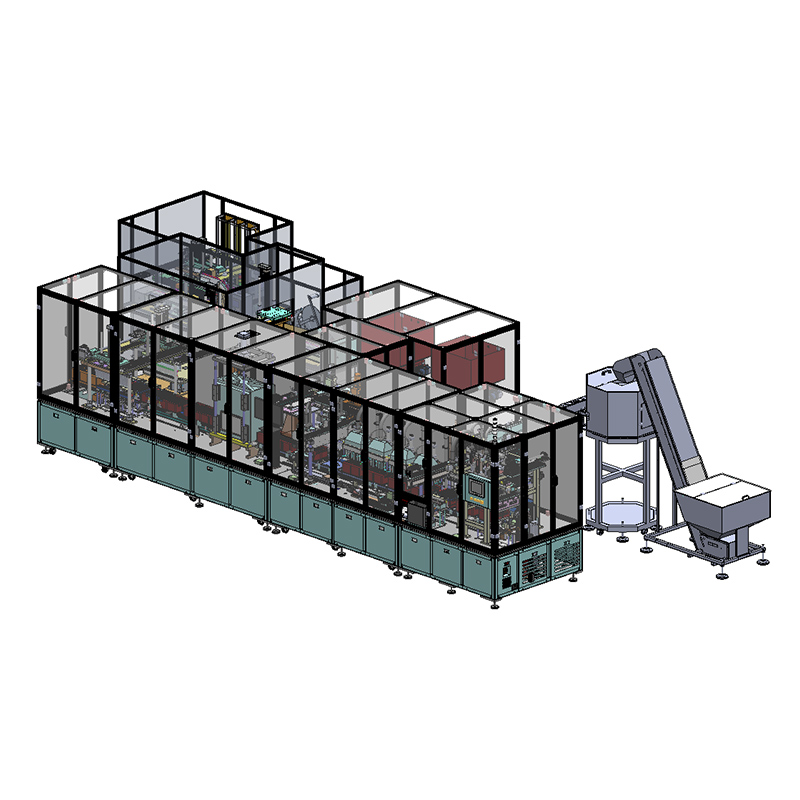
Catheter assembly automation refers to the use of automated machinery, robotics, and advanced technologies to streamline and improve the process of assembling catheters. These systems can handle tasks ranging from cutting and shaping materials to inserting components and ensuring the final product meets rigorous medical standards.
Unlike traditional manual methods, which are often labor-intensive and prone to human error, automated systems offer precise control over every stage of production. By employing robotics, sensors, and AI-powered quality assurance mechanisms, catheter assembly automation can maintain high levels of consistency and reduce the risk of defects.
In the medical device manufacturing industry, precision and speed are paramount. Automation systems offer substantial improvements over manual labor by performing repetitive tasks faster and with greater accuracy. Automated systems not only ensure compliance with health and safety regulations but also provide scalability to meet fluctuating market demands.
Common automated technologies used in catheter assembly include robotic arms, vision systems, and integrated software for real-time monitoring. These tools allow manufacturers to achieve consistent output and reduce the time it takes to deliver products to healthcare providers.
While many medical devices require precision manufacturing, catheters present unique challenges. The delicate nature of the materials and the need for extreme cleanliness and precision make manual catheter assembly difficult. Automated systems, however, can handle these tasks with greater precision and lower risk of contamination, which is critical in medical applications.
By using highly specialized automated systems, manufacturers can produce catheters with fewer defects and ensure that they meet the stringent standards required in the medical field.
One of the most significant advantages of catheter assembly automation is the speed at which it can produce high-quality products. Automated systems work around the clock, completing repetitive tasks faster than manual labor. This reduction in production time means that manufacturers can fulfill orders more quickly, improving lead times and overall productivity.
In traditional manual catheter assembly, each component needs to be handled by human workers, which can lead to delays and inefficiencies. Automation speeds up the process by simultaneously managing multiple tasks, allowing for quicker production cycles.
Table 1: Comparison of Production Times (Manual vs Automated)
Process | Manual Assembly Time | Automated Assembly Time |
Cutting Components | 10 minutes per unit | 1 minute per unit |
Insertion of Parts | 15 minutes per unit | 2 minutes per unit |
Quality Inspection | 5 minutes per unit | 30 seconds per unit |
Total Time (per unit) | 30 minutes per unit | 3 minutes per unit |
Automation significantly reduces labor costs by minimizing the need for human workers in repetitive tasks. This cost reduction is especially important in the competitive medical device manufacturing sector, where even minor price increases can affect profitability.
Moreover, automation reduces human error, which can be costly and time-consuming in traditional catheter assembly processes. By relying on machines that perform tasks with high precision, manufacturers can avoid costly recalls or product failures.
Automated systems offer scalability that manual processes cannot match. When demand for catheters rises or production volume increases, automation systems can be easily adjusted to handle the surge in production, often with minimal downtime. This flexibility allows manufacturers to quickly ramp up output or shift production priorities based on market trends, seasonal fluctuations, or evolving medical needs, all while maintaining consistent quality and efficiency.
Automation in catheter assembly offers a high level of precision that manual labor cannot match. The use of robotic arms and precision tools ensures that every component is assembled to exact specifications. This high degree of accuracy is critical for medical devices, where even small deviations can lead to serious issues in patient care.
Automated systems also allow for continuous monitoring and real-time adjustments, ensuring that each catheter is manufactured to the highest standards.
Maintaining consistency is essential in medical device manufacturing, especially for products like catheters, where uniformity directly affects performance and patient safety. Even small variations in size, shape, or material quality can lead to product failure or complications. Automation guarantees that every batch of catheters is produced with the same high quality, regardless of the scale of production. Automated systems are programmed to follow precise, repeatable processes, ensuring that each catheter meets the required standards without deviation. This ability to replicate the exact same process consistently is a key strength, reducing variability and ensuring reliable, high-performance products every time.
Table 2: Impact of Automation on Consistency
Quality Parameter | Manual Assembly | Automated Assembly |
Dimensional Accuracy | 85% consistency | 99% consistency |
Material Handling | High variation | No variation |
Defects per Batch | 10% | <1% |
The medical device industry is heavily regulated, with strict requirements for product quality and safety. Automated catheter assembly helps manufacturers comply with these regulations by ensuring that every step of the production process is standardized and traceable. This is particularly important when submitting products for certification or approval by regulatory bodies.
Automated systems can be programmed to adhere to specific regulatory standards, making it easier for manufacturers to pass inspections and meet certification requirements.
Automation helps reduce costs in several areas, from labor to material waste. Automated systems optimize the use of materials, ensuring that every component is used efficiently and minimizing scrap. Additionally, by reducing the need for manual labor, manufacturers can lower their overhead costs.
Long-term, the financial savings provided by automation can result in significant cost reductions for manufacturers, making automation a sound investment in the medical device industry.
Automation enhances operational efficiency by streamlining the entire production process, allowing tasks that once required multiple manual steps and human intervention to be handled by a single, integrated system. This reduction in complexity leads to faster processing times and minimizes the risk of human error. By automating repetitive tasks, manufacturers can also eliminate bottlenecks, ensuring a more consistent workflow. Additionally, automation systems are equipped with real-time monitoring and diagnostics, which helps identify and address issues quickly before they lead to significant downtime. As a result, production runs more smoothly, with fewer disruptions, maximizing overall operational efficiency.
Table 3: Operational Efficiency: Manual vs Automated
Process | Manual Assembly | Automated Assembly |
Setup Time | 60 minutes | 10 minutes |
Production Downtime | 5% of total time | 1% of total time |
Maintenance Frequency | Monthly | Quarterly |
With automation, there is significantly less reliance on outdated manual equipment, which often requires frequent repairs and expensive maintenance. Unlike older machinery, modern automated systems are built with advanced technologies that are more durable and efficient. These systems are designed to perform consistently over extended periods with minimal wear and tear. As a result, they require less upkeep, leading to reduced maintenance costs. The longer lifespan of automated equipment also translates into a better return on investment, as manufacturers can operate at optimal levels without the constant need for costly repairs or replacements.
The benefits of automated catheter assembly for the medical industry are clear. From increased efficiency and reduced labor costs to improved product quality and enhanced safety, automation has the potential to revolutionize the way medical devices are manufactured. As the medical industry continues to grow, the adoption of automated systems will become increasingly vital. Not only does automation support higher production standards and safety regulations, but it also opens doors for innovation and sustainability. Manufacturers looking to stay ahead in the competitive landscape should seriously consider investing in catheter assembly automation to improve operations and meet the ever-growing demand for high-quality medical products. Topkey is at the forefront of this transformation, providing cutting-edge automated solutions that help manufacturers streamline their processes, enhance product consistency, and meet the highest industry standards.

A: Catheter assembly automation refers to the use of advanced robotics, machinery, and software to streamline and optimize the production process of medical catheters. It reduces human intervention, increases efficiency, and ensures consistent product quality.
A: Catheter assembly automation improves efficiency by speeding up production times, minimizing human error, and allowing systems to operate continuously. This reduces manufacturing delays and helps meet increasing demand for high-quality medical devices.
A: Investing in catheter assembly automation helps manufacturers reduce labor costs, improve product quality, enhance safety standards, and achieve greater consistency across production runs. It also supports scalability as market demands grow.
A: Automation ensures precision and consistency, reducing defects and variations in each catheter. This level of control is crucial for medical products, where even minor discrepancies could lead to serious consequences.


