
- Home
- Products
- Consumable
- Capabilities
- Service
- Videos & News
- About
- Contact Us
Views: 0 Author: Site Editor Publish Time: 2026-01-19 Origin: Site


Catheters are vital in numerous medical procedures, from diagnostics to treatment. High-demand, high-volume production is essential for accessibility and affordability. However, scaling up catheter manufacturing brings challenges like precision, regulatory compliance, and cost management. In this article, we will explore how catheter assembly automation is addressing these challenges and reshaping the industry. You will learn how automation enhances production efficiency, consistency, and quality in catheter manufacturing.
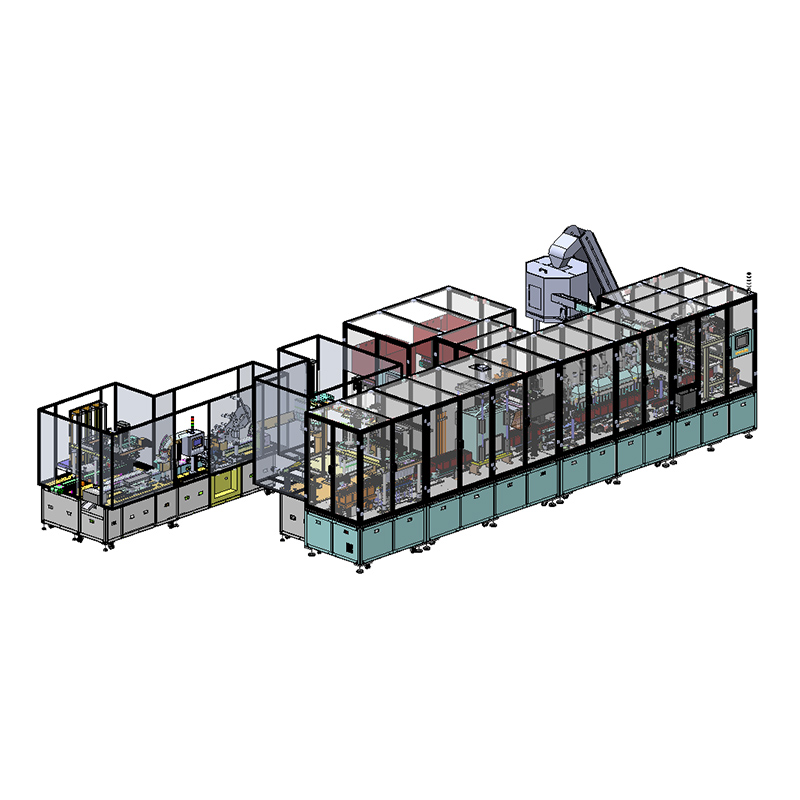
The production of catheters requires high precision and efficiency to meet the needs of the medical industry. As the demand for catheters increases, manufacturers face the challenge of producing large quantities of these life-saving devices without compromising on quality. Automation has emerged as a solution to improve the manufacturing process by enhancing speed, consistency, and quality control.
Challenge | Impact on Manufacturing | Automation Solution |
Precision and Accuracy | Small deviations can lead to defects, compromising safety. | Automation ensures precise, consistent production. |
Regulatory Compliance | Complex documentation and traceability requirements. | Automated systems provide detailed records for audits. |
Cost Efficiency | High labor costs and material wastage. | Automation reduces waste, labor, and operational costs. |
Automation refers to the use of control systems such as robots, conveyors, and machines to reduce human intervention. It has become an essential part of modern manufacturing, especially in sectors requiring precision, such as medical device production.
In the context of catheter manufacturing, automation has revolutionized the production process. It allows for faster production, better quality control, and reduced labor costs. The growing demand for high-quality, high-volume catheter production makes automation indispensable to meet these needs efficiently.
Precision is critical in catheter manufacturing. Even the smallest deviation in dimensions can lead to defective products, which in turn affects patient safety. This is particularly significant in high-volume production, where maintaining uniformity is challenging.
Precision Challenge | Manual Process | Automated Solution |
Component Insertion | Human error can lead to incorrect component placement. | Robots ensure exact placement of components. |
Dimensional Consistency | Variability in measurements can cause defects. | Automated systems measure and adjust in real-time. |
Quality Control | Inconsistent inspection quality. | Automated optical inspection guarantees 100% defect detection. |
The medical device industry is highly regulated. Catheters must meet rigorous standards set by regulatory bodies such as the FDA and ISO. Meeting these regulations requires not only precision in manufacturing but also comprehensive documentation and traceability.
Automation ensures that every step of the catheter production process is documented. From the initial raw materials to the final product, automated systems track and store data, making it easier to comply with regulatory requirements. This also simplifies audits, as automated systems provide transparent and accurate records.
High-volume catheter manufacturing demands cost efficiency. Labor, raw materials, and operational overheads need constant management. Automation is key to reducing these costs by optimizing the use of resources.
Resource Management Area | Manual Process | Automated Process |
Labor Efficiency | High labor costs due to manual handling. | Robots reduce the need for human labor. |
Material Usage | Material waste due to human error. | Automation minimizes waste through precision. |
Operational Downtime | Downtime caused by human fatigue and errors. | Continuous operation with minimal downtime. |
Automation streamlines the entire assembly process, from component insertion to final packaging. Automated assembly lines integrate various machines, including robotic arms, conveyor belts, and precision dispensers, to perform specific tasks that were previously handled manually.
For example, in catheter manufacturing, robotic arms can insert inner components into the catheter tube with high accuracy. Conveyor belts move products seamlessly through different stages of the assembly, ensuring consistent speeds and reducing human error.
Notes: Automated assembly lines often utilize collaborative robots (cobots) that work alongside human operators to enhance efficiency without replacing the workforce entirely.
Assembly Stage | Manual Process | Automated Process |
Component Insertion | Requires multiple operators for placement. | Robotic arms perform precise and repetitive tasks. |
Product Movement | Human intervention required to transport products. | Conveyor belts efficiently move products between stages. |
Final Inspection | Inconsistent inspection quality. | Automated optical systems ensure 100% defect-free output. |
Quality control is vital in catheter manufacturing. Automated systems provide continuous, non-stop inspection and testing throughout the production process. Optical inspection systems, for instance, use high-resolution cameras to detect minute defects in the catheter’s surface or structure.
Automated testing systems also verify functionality, ensuring that each catheter performs as required before it reaches the packaging stage. This 100% inspection capability ensures that only flawless products reach customers, improving both safety and customer satisfaction.
Automated systems drastically increase production speed without compromising quality. Machines can work 24/7 without the fatigue and limitations of human labor, accelerating throughput.
For example, robotic arms can assemble multiple components in a fraction of the time it would take a manual operator, significantly increasing production capacity. As a result, manufacturers can meet the growing demand for catheters and reduce lead times.
Benefit | Manual Production | Automated Production |
Assembly Speed | Limited by human capacity. | Machines can work continuously at high speeds. |
Quality Control | Susceptible to human error. | Automated systems ensure consistent product quality. |
Lead Time | Longer due to human involvement. | Faster production reduces time-to-market. |
One of the most notable benefits of catheter assembly automation is the ability to produce consistent, high-quality products. Automated machines operate with precise tolerances, minimizing variations in product dimensions or performance.
In manual production lines, small inconsistencies may accumulate over time, leading to higher defect rates. Automation reduces this risk, ensuring that each catheter produced is identical to the next, which is crucial for medical device reliability.
While the initial investment in automation technology can be significant, the long-term cost savings are substantial. Automation reduces the need for labor, cuts down on material waste, and improves energy efficiency.
Moreover, automation optimizes production, reducing costly errors and the need for rework. Over time, the return on investment (ROI) from automation becomes clear, as companies experience reduced operational costs and higher profit margins.
Tip: Calculate the total cost of ownership (TCO) when considering catheter assembly automation to evaluate the long-term savings, including labor, maintenance, and energy consumption.
The upfront cost of automation systems can be a significant barrier for some manufacturers. However, the investment is often justified by the long-term savings in labor and operational costs.
Companies can mitigate the initial cost by opting for phased implementations, starting with the most critical processes and expanding automation as needed. Additionally, financial incentives and grants may be available for businesses investing in automation.
Integrating new automation technologies into existing manufacturing lines can be challenging. It requires careful planning and coordination to ensure compatibility between old and new systems.
Successful integration often involves collaboration between automation providers and internal teams to tailor solutions that fit seamlessly into current operations. Training the workforce to work with new technologies is also crucial for smooth adoption.
As market demands change, so too must manufacturing processes. One of the significant advantages of catheter assembly automation is its adaptability. Automated systems can easily be reprogrammed or modified to accommodate new product designs or shifts in production volume.
This flexibility is particularly beneficial in an industry like medical devices, where innovation and customization are constant. Automation allows manufacturers to quickly pivot and meet the evolving needs of the market.
In conclusion, catheter assembly automation is transforming high-volume manufacturing by addressing the industry's challenges related to precision, regulatory compliance, cost management, and production speed. Automation provides a clear path to improving product consistency, reducing operational costs, and increasing production throughput. As automation technologies continue to evolve, the future of catheter manufacturing looks brighter. With advancements in robotics, AI, and 3D printing, manufacturers like Topkey can expect even greater flexibility and efficiency in production. Topkey will remain a crucial factor for companies looking to stay competitive and meet the growing demands of the medical device industry.
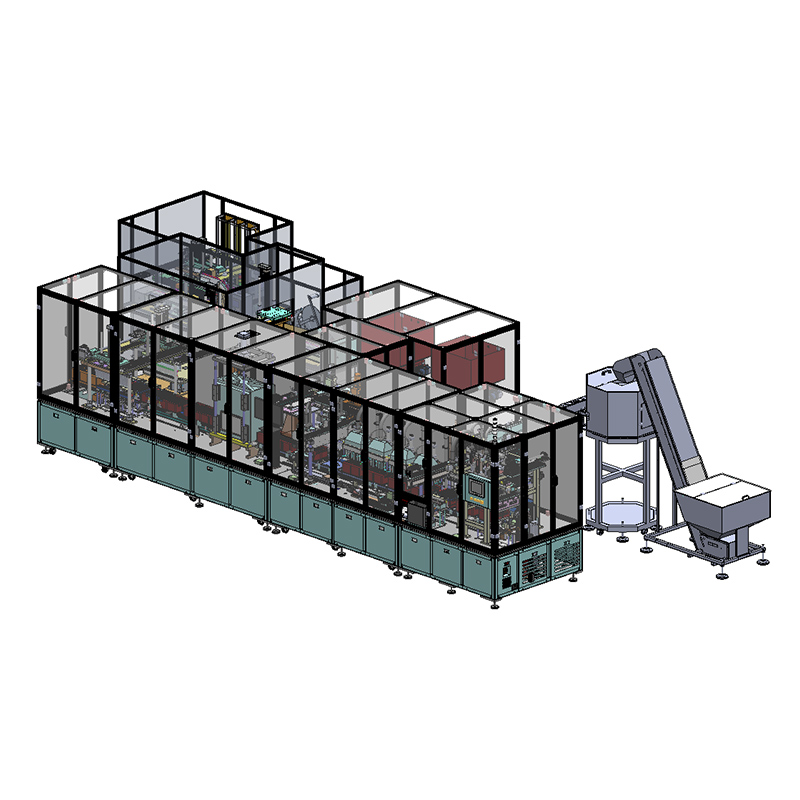
A: Catheter assembly automation refers to the use of robotic systems, conveyors, and precision machines to streamline the manufacturing process of catheters. This technology reduces human intervention, ensures higher precision, and boosts production efficiency.
A: Automation speeds up the manufacturing process by enabling continuous operation, reducing human error, and optimizing assembly times. This allows for faster throughput without compromising quality.
A: Automation helps address the challenges of maintaining precision, complying with regulatory standards, and managing costs. It improves efficiency, reduces defects, and ensures consistent, high-quality production.
A: Key benefits include increased production speed, enhanced consistency, reduced labor costs, and better quality control. Automation ensures that each catheter is produced with the same high standard.


